
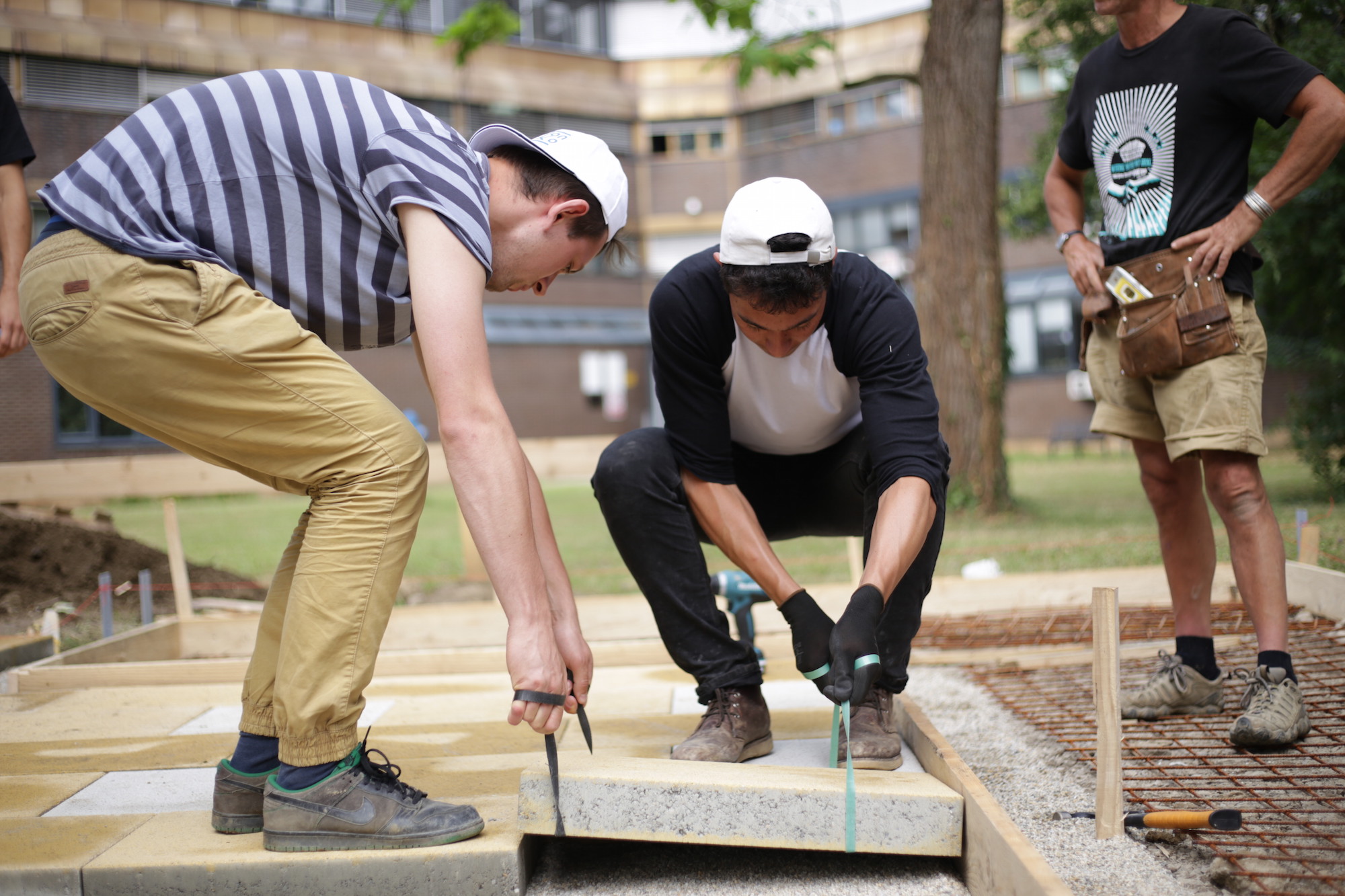
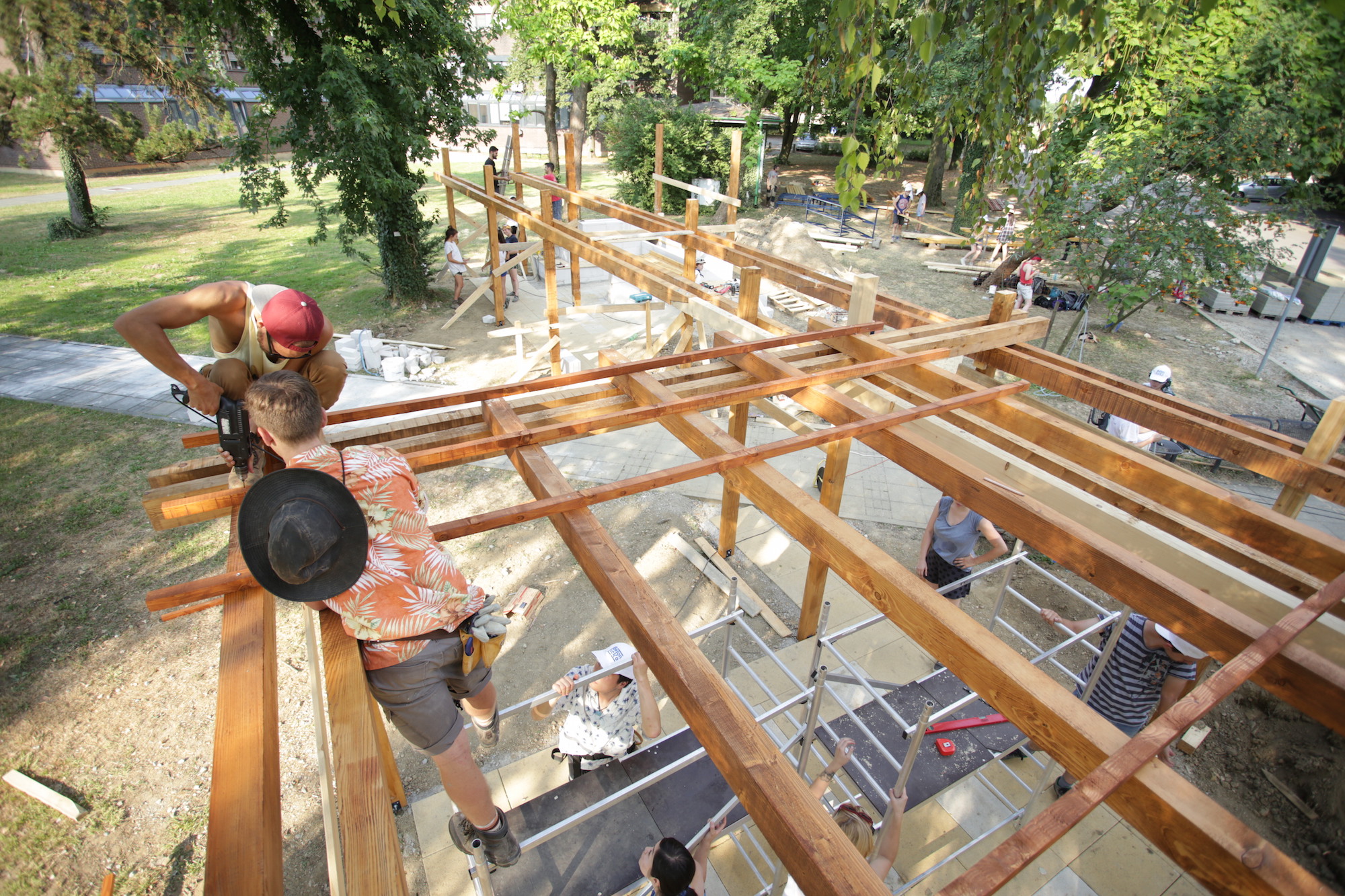
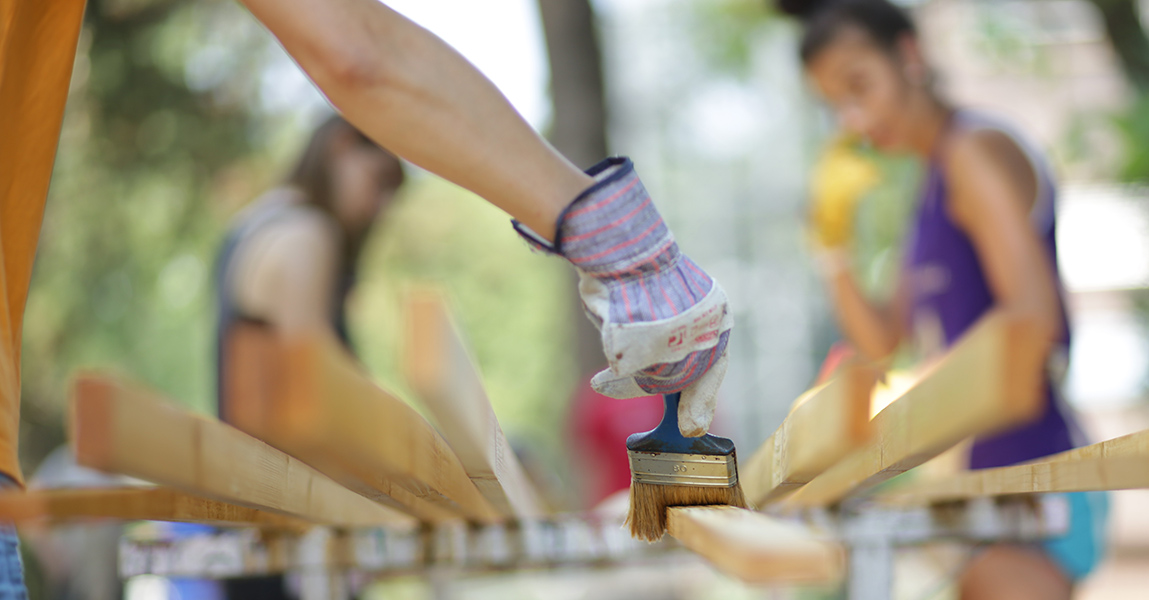
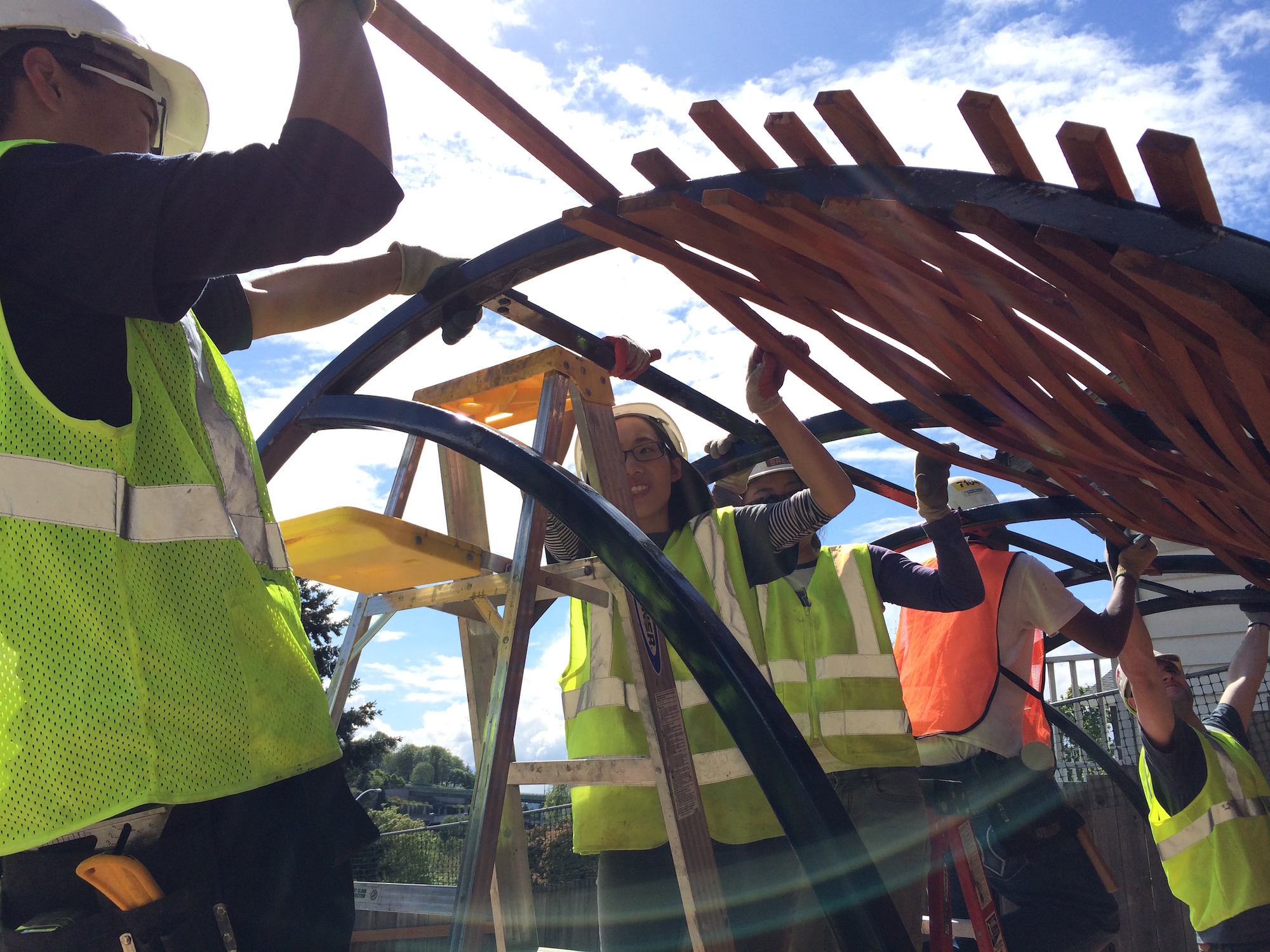
In many academic design programs the tendency is to separate the technical (building) curriculum from the design (studio) courses. In our program students are asked to consider design through the “application of building” and adapt their designs based on actual experience and scale. Our program philosophy is that the art of landscape architecture is not complete without the act of building and that through their involvement in both design and construction, students develop a balance between the conceptualizing and the making of their design. They gain an understanding of the design process as circular, from idea, to building and back to idea. In this process, the ideas, hands, tools and materials come together—design opportunities are discovered and explored.
Designing, Crafting and Building Community: 30 Years of Design/Build in Landscape Architecture
Designing, Crafting and Building Community: 30 Years of Design/Build in Landscape Architecture highlights 30 years of design / build learning, community partnerships, and student work on view at Gould Gallery. Read more about the exhibition.
Congratulations to UW 2025 ASLA Award Winners
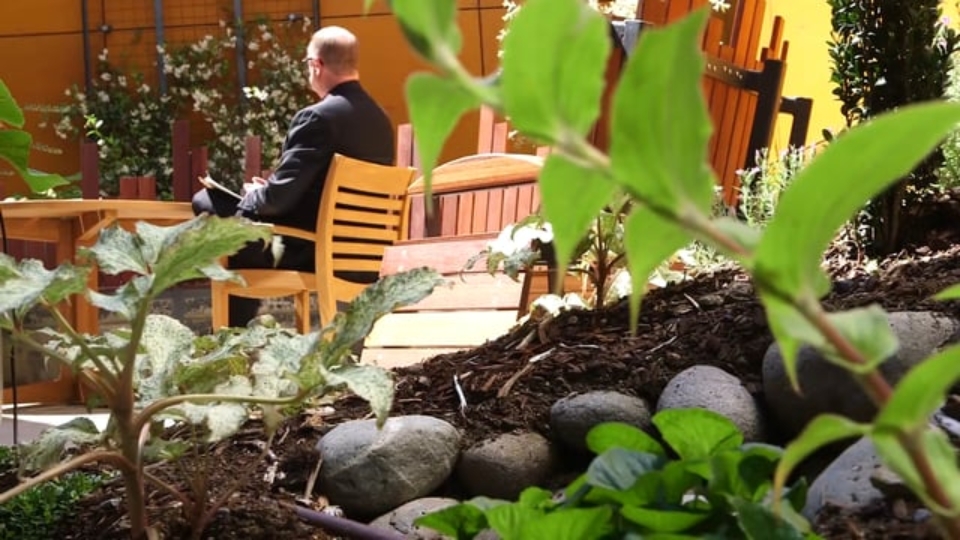
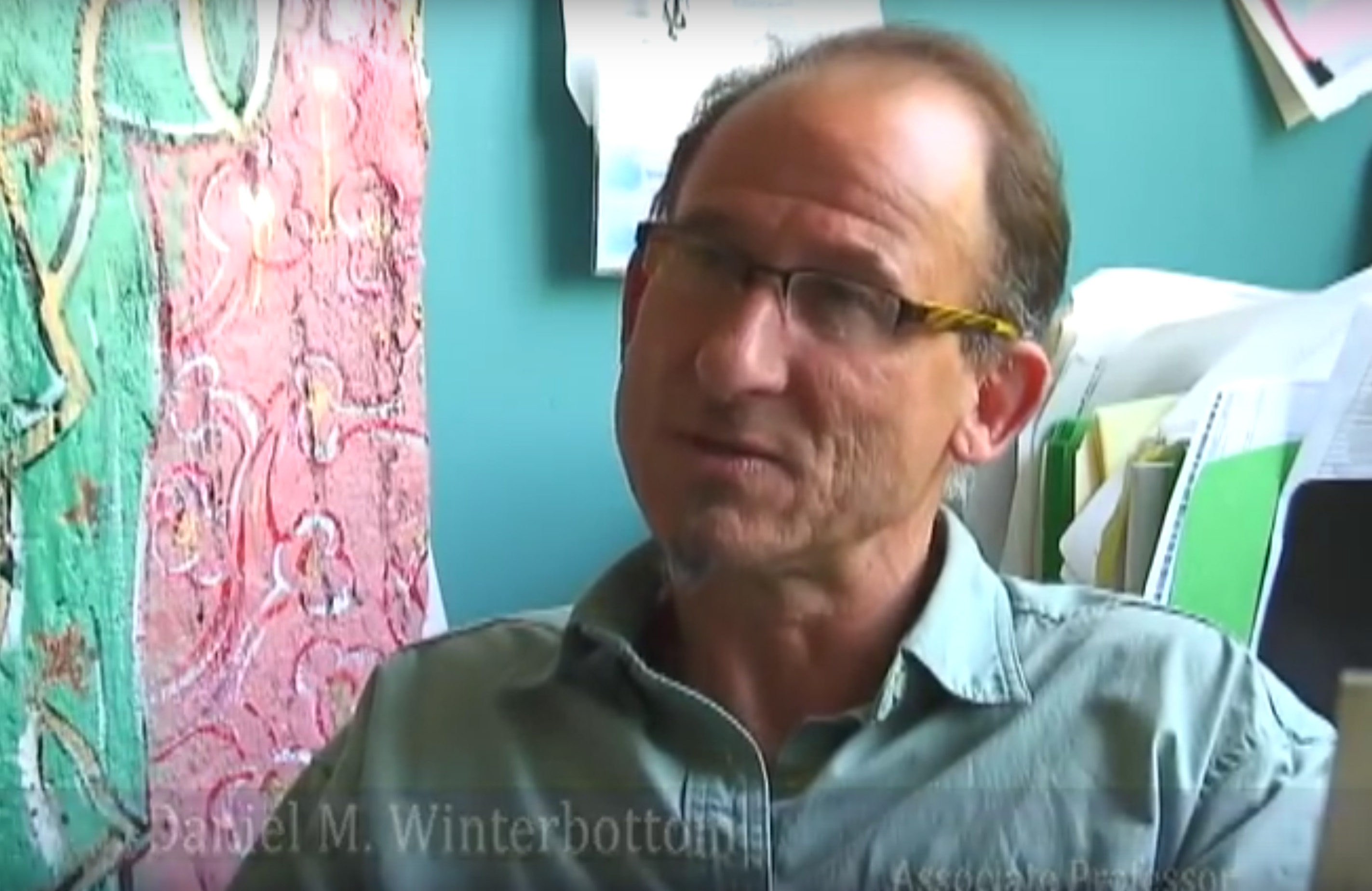
Congratulations to the Design Build Class of 2024 and Professor Daniel Winterbottom for receiving the 2025 ASLA Student Award of Excellence in Community Design. Their project, Stimulating the Senses: A Calming Retreat in a Skilled Nursing Setting, transformed the outdoor environment at Kline Galland Skilled Nursing Facility. Over two quarters, students engaged with staff and residents to design and build the Quint Family Sensory Garden- a restorative space centered on comfort, accessibility, and dignity.
Landscape Architecture Students Design and Build Microhome
Population Tiny Home UW BLA students, Hanbeom Lee, Vasilisa Karp, and Jessica Liao, participated in the MICROHOME Tiny House Design Competition. During their research on the chosen topic of housing for individuals experiencing homelessness, they discovered the Low Income Housing Institute (LIHI) and decided to build a tiny house themselves in order to better understand how these houses are constructed in order to improve upon them. The trio of students were able to realize their thorough plans and create a…
Wapato Pond Opening at UW Farm
Overview of the new wapato pond at the UW Farm designed and built by MLA student Kove Janeski.
Kline Galland Quint Family Sensory Garden Celebration
On June 6th, 2024, Kline Galland community members and staff gathered with our 2024 UWLA Design Build students and families to dedicate the Quint Family Sensory Garden.
Camas ‘Baskets’ Installed in Burke Meadow
Urban environments pose a series of challenges to native habitat projects, such as heat from nearby hardscapes, trash and pollution, and disturbance from people visiting the site. The Burke Meadow project is no exception. One of the greatest challenges to the success of the meadow’s camas is grazing by feral urban rabbits, who often eat the shoots down to the ground in early spring.
BLA Design-Build featured on the Arboretum Foundation Website
Our Woodland Creek Design Build is featured in this season’s Arboretum Foundation newsletter. The graduating class of BLAs did an amazing job renovating the former drainage pipe. To read more great details about the students’ work, check out this article from the Arboretum Foundation website.
Summer Design Build 2022 in Traena, Norway
We welcome back some of our students who went to Traena, Norway to complete their Design/Build with Daniel Winterbottom and co-instructors Luka Jelusic and Mate Rupic! A group of 16 students, some matriculated at UW, left the US in the middle of June 2022 to work on a design/build project on a small island off the coast of Norway for five weeks. Students were asked to create a unique space that could be offered year-round to the local community as…
Spring Design Build and Celebration at Kline Galland
On June 7, 2022 Kline Galland celebrated the completion of this year’s Design Build with a dedication ceremony officiating the space as the Marty Bender Family Garden. Read more about this project.
Inaugural Landscape Architecture Furniture Studio
During Autumn 2021, the Furniture Studio, a legacy course in the Architecture department, was offered to Landscape Architecture students for the first time. While the focus on craft and material remained constant, the context of the work provided a unique scale and scope not previously used in furniture studios. Architecture faculty members Kimo Griggs and Steven M. Withycombe worked with 12 MLA and BLA students to design and fabricate landscape furniture. Students receive a primer on lumber dimensions and wood…
2018 Building New Global Connections | Croatia Design/Build
This story originally appeared on College of Built Environments website on October 23, 2019. You can see the original story here. The UW Landscape Architecture Croatia Design/Build program gives students the unique opportunity to make a lasting, physical impact in their host community. Professor Daniel Winterbottom, an expert in the creation of healing and therapeutic gardens, leads the program. With Professor Winterbottom as their guide, students explore the role of restorative landscapes in the built environment through hands-on learning. They…
2018 Design+Build in Dals Langed, Sweden
In collaboration with students from HDK-Steneby, a design and crafts school located in Dals Långed, 15 students from University of Washington’s College of Built Environments, led by Professor Daniel Winterbottom, worked with the local immigrant and refugee community to create a community garden intended to improve well-being, alleviate the stresses of the integration process and connect this group with the broader community. The project goal was to create a deeper level of trust, connection and mutual respect between longtime residents…
The program, developed in 1995 by Professor Daniel Winterbottom, is offered to undergraduate and graduate students in landscape architecture and related fields.
Our design/build studio format accomplishes two goals. First, it provides an alternative design process, in which thinking and making are integrated. Second, the resulting project provides an amenity for a community in need.
Through our program we seek to develop skills in four main areas: the relationship between thinking and making, collaboration, communication skills and a returning of a benefit to the community. This process is collaborative; building becomes a social as well as a physical art. Students become a team: bringing ideas to fruition and cooperating in the shared act of building. Communication skills are honed and tested through client and community interaction. In this applied teaching model, we provide a critical link between design, building and service learning.
In many of the projects (Varey Memorial Garden, Garden of Eatin’ and Cascade Adopt-a-Park) a larger plan of rebuilding communities through “urban-greening” is addressed. We strive to advance a common societal goal, the improvement of our ecological and social environment. To achieve this we create transferable models in which small degraded “residual” urban parcels of land are redesigned as ecological and social community amenities resulting in an increased quality of life within the urban environment and opportunities for interaction between people and the natural environment. Through the process of community participation and interpretation we develop ecological awareness and social opportunities for interaction and celebration (Santa Ursula Lavandaria, Garden of Eatin’, Cascade Adopt-a-Park, Sandpoint Outdoor Classroom).
Through our work we have attempted to repair unsatisfactory physical relationships by demonstrating alternatives to damaging ecological practices (Lavandaria at Santa Ursula) and addressing unsatisfactory social relationships by bringing opposing groups together. One example can be found in the Garden of Eatin’, where interaction between members of University of Washington and the surrounding neighborhood have been developed and through ensuing dialogue members of both communities have gained a better understanding of each other.
All our clients are community groups and students must work with community members to complete the project, and expose the students to people of vastly different experiences, talents, ages, and often cultures. In an attempt to make our projects meaningful to the communities with whom we work, we have developed an inclusive participatory design process in which community members participate in the conceptualizing and design processes, to create places that are meaningful to all users.
An important feature of our design/build projects is the exploration of sustainable design, which includes reduction of energy consumption, ecological restoration, cultural and historic preservation, community development and resource conservation. Another question posed in the design/build studio, is how can landscape architects make landscapes appropriate to a culture and a place. In this process we build bridges of cultural understanding, both abroad (Lavandaria at Santa Ursula, Mexico) and locally (Cascade Adopt-a-Park) and with children (Sandpoint Outdoor Classroom). These are not only transferable models of sustainable and socially responsible design, but we have refined a process that is transferable to other programs and community groups including Ohio State University which adapting our model for use in their programs.