MLA Capstone 2026: Thesis Projects

MLA '26 Graduates Thesis Gallery
Throughout the course of the 2025/26 year, graduating MLA students worked to synthesize, clarify, represent, and communicate their design ideas on a chosen topic for a thesis or group project. This year long work represents the culmination of our student's learning in the Masters of Landscape Architecture program, and reflects the tremendous progress, dedication, and passion poured into their craft.
Over the course of winter and spring quarters, students, led by faculty Julie Parrett, developed their concepts and final designs to present at the culmination of their academic journey in Landscape Architecture at the University of Washington.
Please explore and engage with these projects, and celebrate all of the hard work invested into these designs!
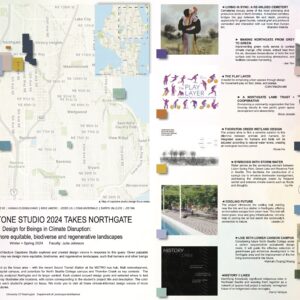
MLA Capstone Studio 2026
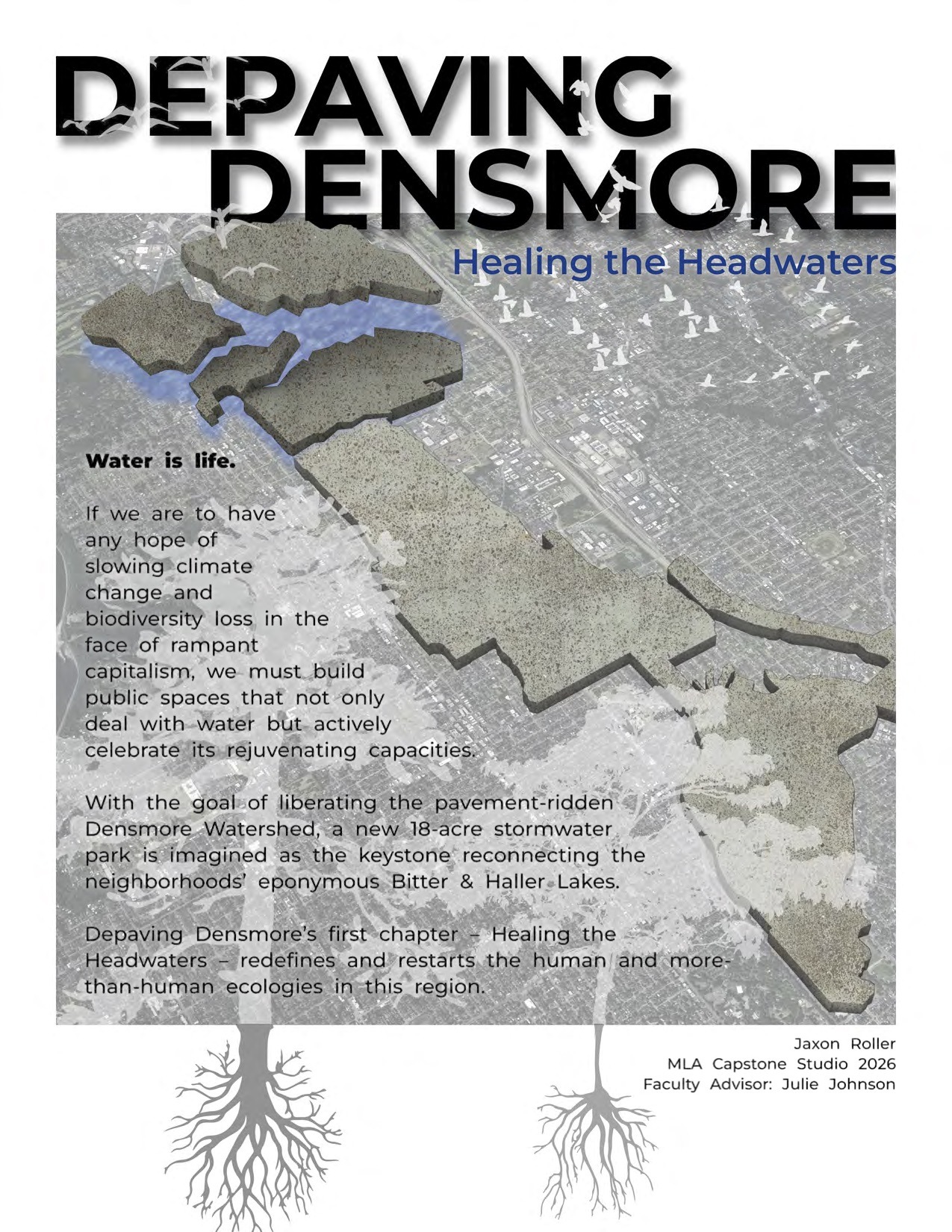
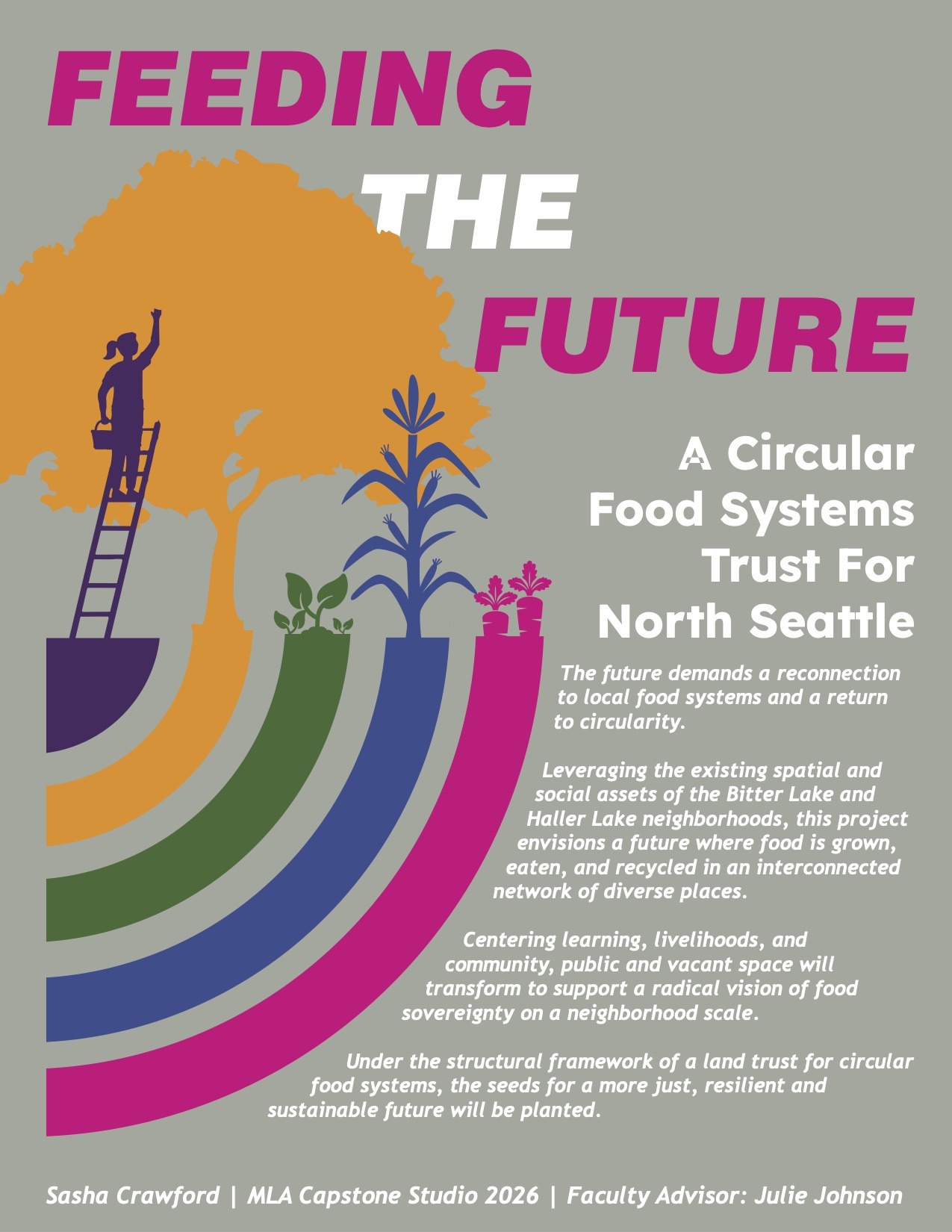
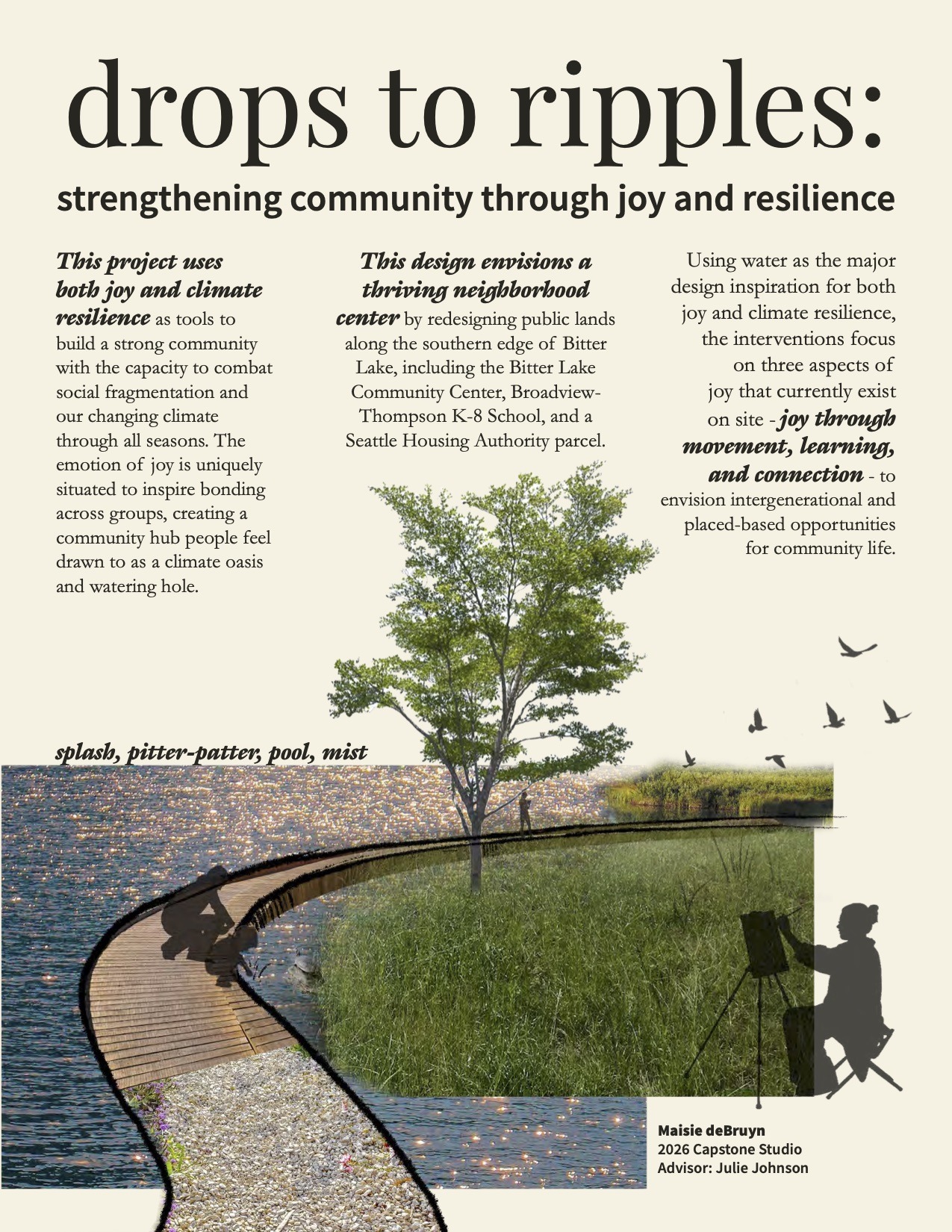
Given palpable, increasing climate and related disruptions, this 2026 Master of Landscape Architecture Capstone Studio asked students to provoke poiesis—the creative making of novel and needed change--through design.
The students scoped and developed design visions that:- articulate new relations—among species, among actors, with place, within processes of design/making;
- undertake design experimentations—through more expansive and/or detailed studies and making; and
- create and express visions that are vital for more just and resilient futures.
Please find the attached individual project descriptions to learn more about the 2026 MLA Capstone Studio.
Visit the “Provoking Poiesis” Studio StoryMap for an overview of the studio focus, students’ North Seattle Analysis, and locations with links to the students’ projects.
PROVOKING POIESIS
Relations + Experimentations + Visions for Resilience
MLA Capstone 2025: Thesis Projects
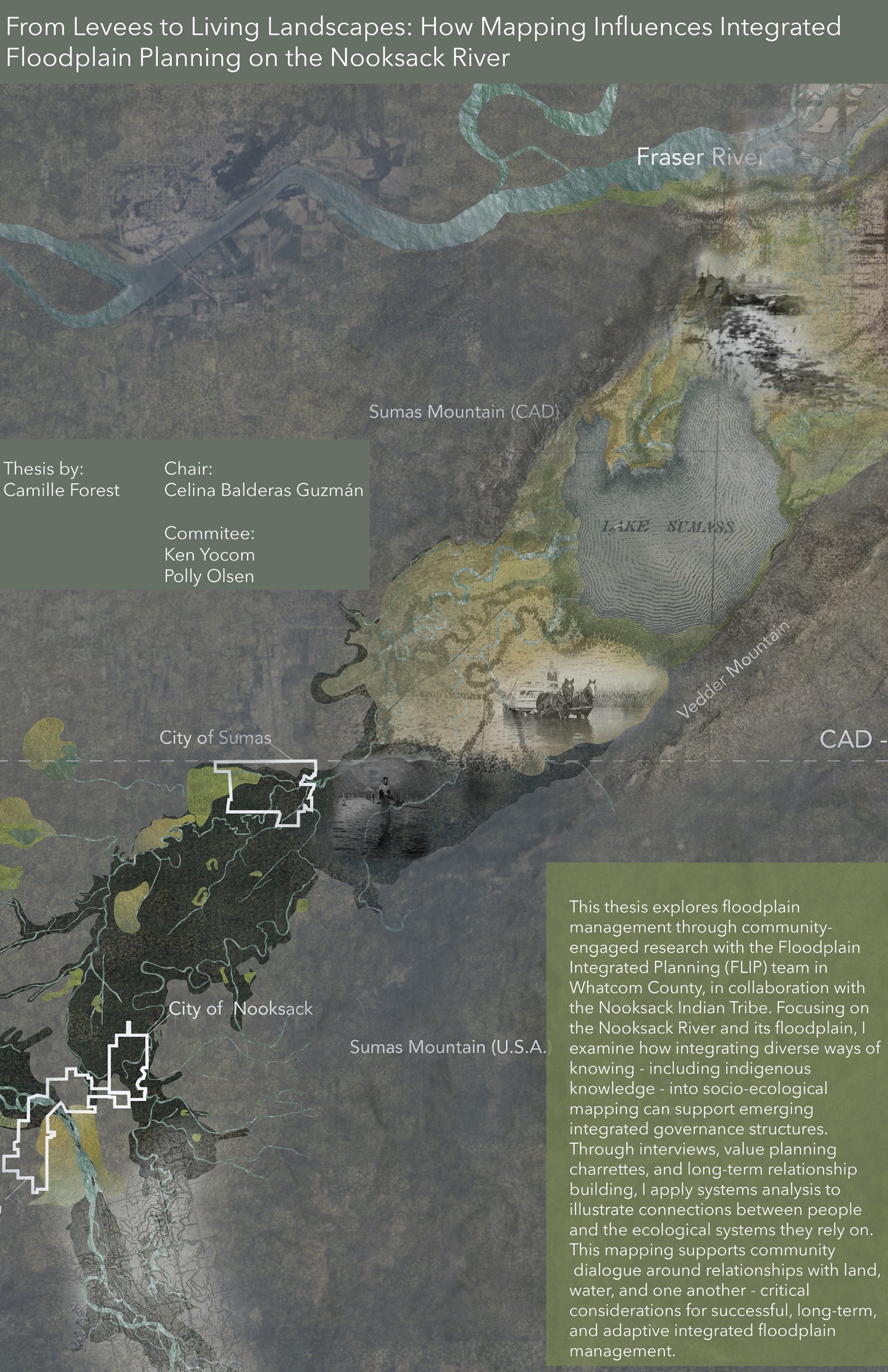
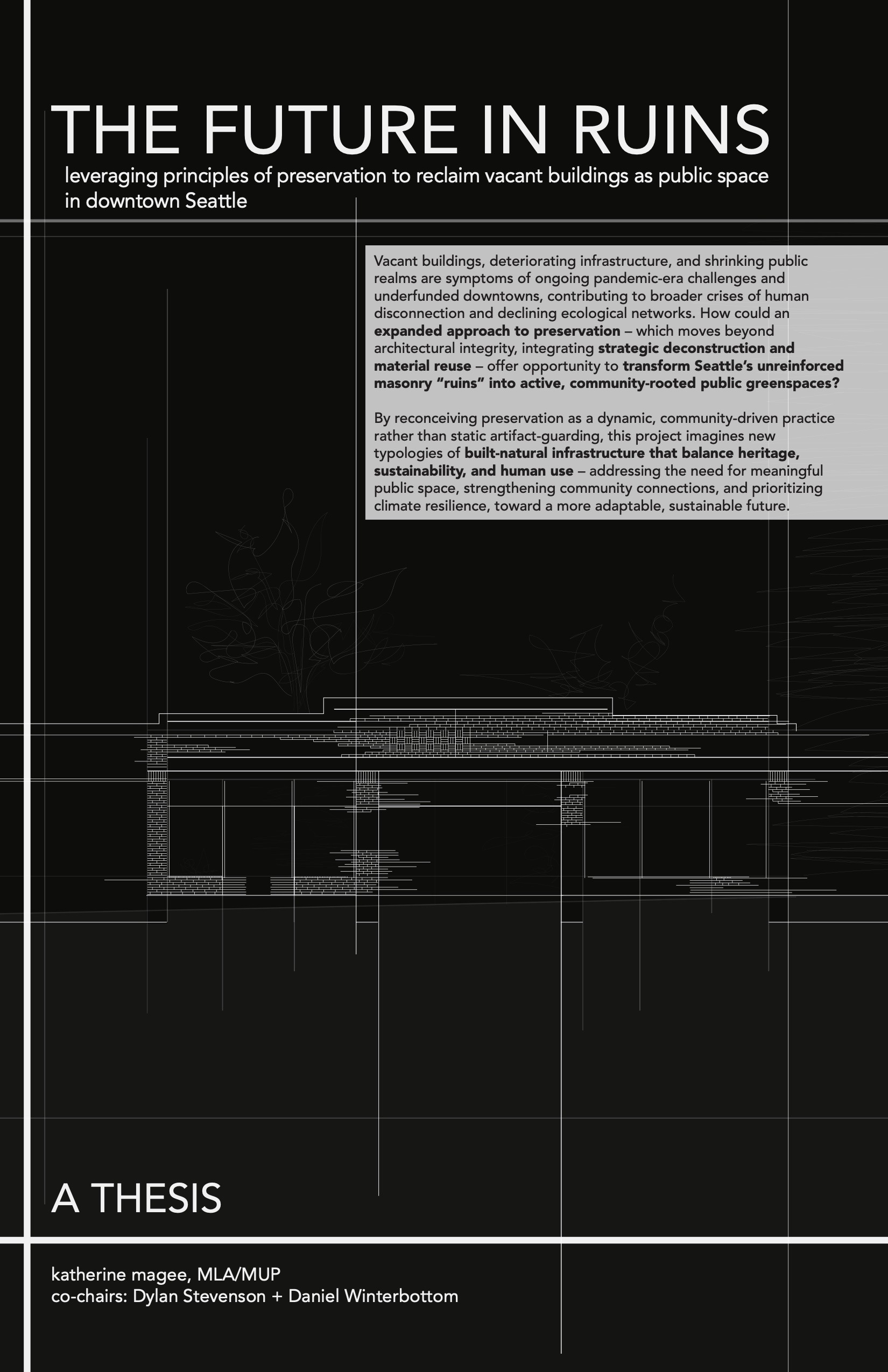
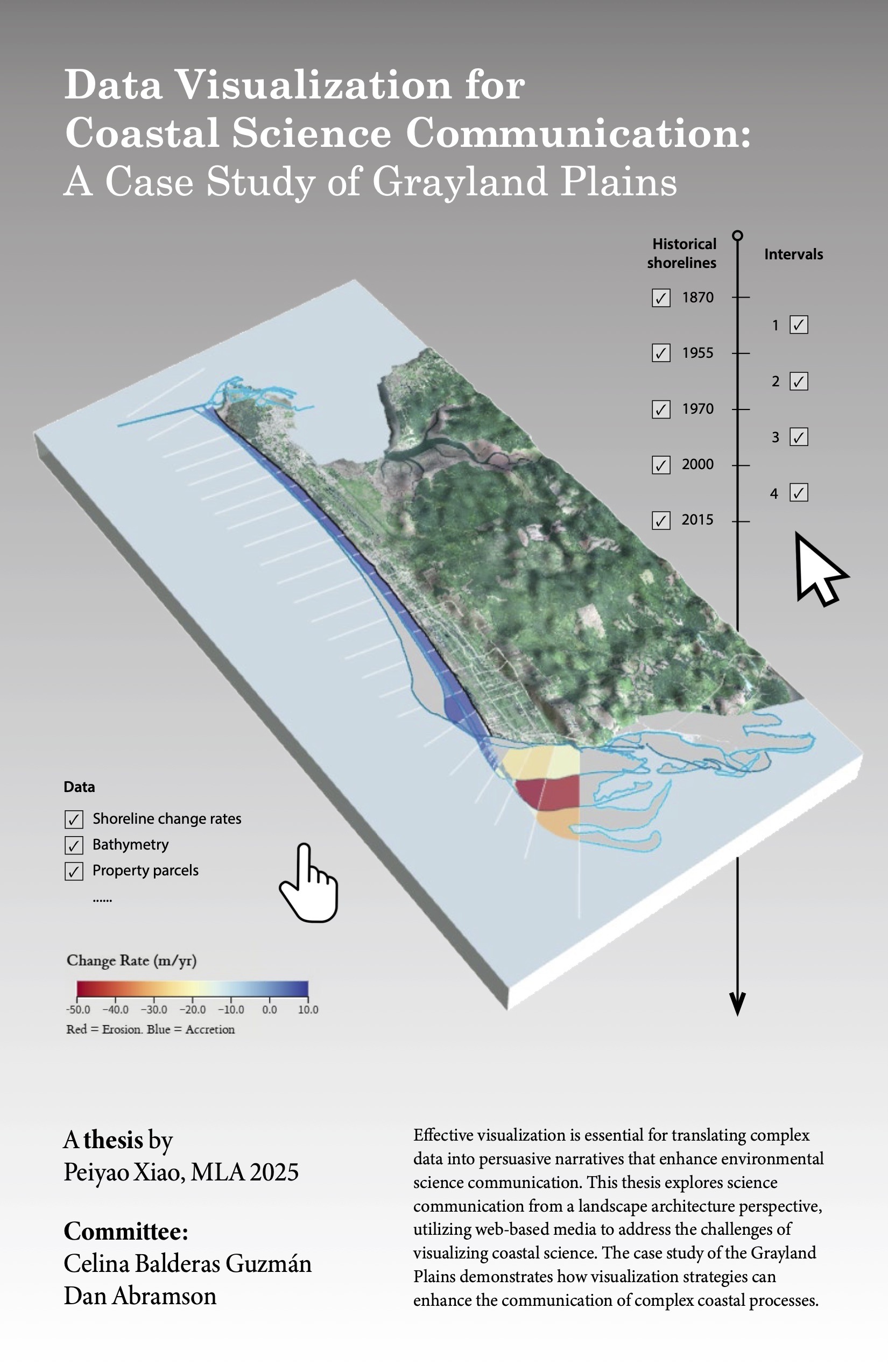
MLA '25 Graduates Thesis Gallery
Throughout the course of the 2024/25 year, graduating MLA students worked to synthesize, clarify, represent, and communicate their design ideas on a chosen topic for a thesis or group project. This year long work represents the culmination of our student's learning in the Masters of Landscape Architecture program, and reflects the tremendous progress, dedication, and passion poured into their craft.
Over the course of winter and spring quarters, students, led by faculty Julie Johnson, developed their concepts and final designs to present at the culmination of their academic journey in Landscape Architecture at the University of Washington.
Please explore and engage with these projects, and celebrate all of the hard work invested into these designs!
MLA Capstone Studio 2025
“...it is now easier for us to imagine the end of the world than an alternative to capitalism.”
-Anthony Dunne and Fiona Raby, Speculative Everything, p. 2.
It is somehow easier to imagine the dystopian destruction of the physical world than the restructuring of socio-political and economic systems that determine the physical, structural, aesthetic, and operational outcomes of built environments. This is our starting point: challenge accepted.
Learning from utopian visions from the 20th century, the work of science-fiction writers, notably Octavia Butler, and examples of manifestos by designers put forth over the last decade, students will develop their own design manifestos not for the end of the world, but for the end of capitalism as we transition to a decarbonized future.
Please find the attached studio project description as well as individual project descriptions to learn more about the 2025 MLA Capstone Studio
DESIGN MANIFESTOS FOR THE END OF CAPITALISM
Speculative Visions + Narrative Landscapes for a Changing Climate
Image Credit: WAI Architecture Think Tank (Cruz Garcia and Nathalie Frankowski), Cities of the Avant-Garde, 2011/2020.
2024 MLA Capstone Studio
2024 MLA Capstone recap displaying the work of students in the 2024 Capstone Studio.
2022 MLA Capstone
[one_fourth]
Course Instructors
Course Date
Spring 2022
Course Type
Graduate Capstone Studio
[/one_fourth][three_fourth_last]
GENERATIVE INFRASTRUCTURES
CATALYTIC LANDSCAPES
EMERGENT NARRATIVES
SPECULATIONS FOR SEATTLE’S SOUTH PARK COMMUNITY
Show Your South Park by Erin Irby, Stephanie Roh, Erynne Van Zee Challenge
Climate change, social injustice, dwindling public funds, industrial contamination, and population growth
and migration task the built environment, and particularly public landscapes with addressing an
expanding range of physical, cultural, and infrastructural demands. This mandates
a fundamental shift from public landscapes as a collection of discrete properties with limited ability for
resilience and agency to the reconfiguration of public landscapes as nimble, flexible, and sustaining
urban systems. To realize this, public lands must be reconceived as generative infrastructures acting
across catalytic landscapes revealing emergent, alternative narratives. REFUSE | INFUSE by Cyrus Deloye and Justin Roberts Intent
The capstone studio’s work will concentrate on speculative thinking and design research within an urban
context. As a capstone studio, based on their research and interests, students will determine their specific focus of exploration, the principal scale of their investigation, and site for their design interventions as they consider the potential of public landscape
systems to respond to conditions of climate change, environmental justice, community wealth building
and displacement. Students will consider potential futures through the development of possible future
scenarios. The scenarios will be used to both “ground truth” ideas of policy and implementation and
conversely to inspire what policies and implementation models are needed to create the scenario. The
scenarios will serve as a flexible mechanism for exploration across time (near and distant futures), space
(site, neighborhood, city, region) and agency (community member, designers, city, state).REDEFINING BOUNDARIES by Yingzhi (Sherry) Xu Sites
The studio will explore urban public landscapes across scales – the region, the city, the neighborhood and
the site. We will focus on the South Park neighborhood in Seattle. Objectively, South Park’s defining
characteristics are similar to other under resourced urban neighborhoods: its population is diverse and
predominantly indigenous and people of color; almost a third of its population lives below the poverty
line; it is facing increasing pressures of displacement and gentrification; it suffers from noise, air, and
water pollution – the legacy of the adjacent Duwamish Waterway (aka a 5.5 mile long Superfund site),
active industrial businesses and a state highway that bisects the community; and the typical life
expectancy is lower than any other neighborhood of Seattle. South Park’s literal ground is tenuous, being
part of the former Duwamish River’s tidal flats, and is at risk of flooding from increasingly more frequent
and intense storm surges and sea level rise.EXTENTION OF CONNECTION by Jiahua Zou Outcomes
A goal of the studio is exploring the role designers (and the College) in collaboration with communities should play
envisioning and planning for Seattle’s near and distant futures. Listening to, learning from, and engaging
with current conversations about our city with its officials is fundamental to leveraging landscape architecture in
configuring the city we want to inhabit.[/three_fourth_last]
Emotional Infrastructure: Through time, place and disruption, fostering a culture of care in post-earthquake Christchurch, New Zealand
Laura Durgerian, 2019. Advisors: Lynne Manzo and Rachel Berney
First, Let us Look Together. through forests, trees, wood, and building
Bennet Walker Song, 2020. Advisors: Daniel Winterbottom, Kimo Griggs
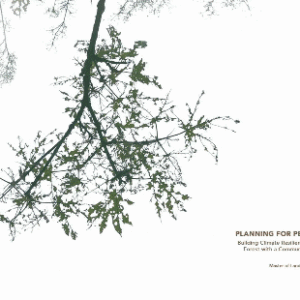
Planning For Pest Readiness: Building Climate Resilience in Seattle’s Urban Forest with a Community-centric Approach
Luyu Zeng, 2021. Advisors: Jeff Hou, Lynne Manzo
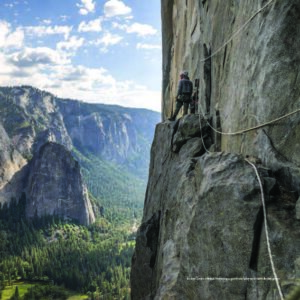
Vertical Landscapes: Learning From a Rock Climbing Perspective
Ellie Murray, 2021. Advisors: Julie Johnson, Branden Born
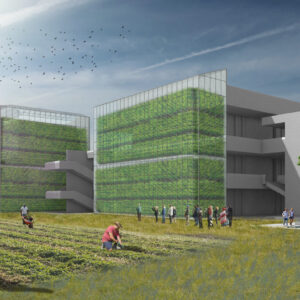
Living Laboratory: A Circular Framework for North Seattle College
Emilio Craddock, 2021. Advisors: Gundula Proksch, Julie Johnson
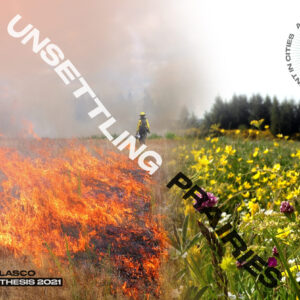
Unsettling Prairies: A Critical Reimagining of Fire Management in Cities
Jocine Velasco, 2021. Advisors: Ken Yocom, Cleo Woelfle-Erskine, Clarita Lefthand-Begay
Design with Diploria: Coral Infrastructure for a New Coastal Future
Matt Grosser, 2020. Advisors: Ken Yocom and Jacqueline Padilla-Gamiño
Nourishing Neighborhoods: Cultivating Local Food Connections in the Urban Environment
Asya Snejnevski, 2020. Advisors: Ken Yocom and Julie Johnson
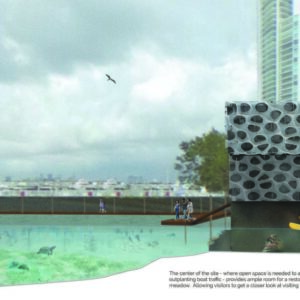
Pier Pressure: Addressing Ecological Opportunities of Nearshore Infrastructure in Lake Washington's Union Bay
Krista Doersch, 2020. Advisors: Nancy Rottle and Ken Yocom
Voices of Impact: Assessing the Felt Impacts of Open-Pit Gold and Copper Mining in British Columbia
Ilsa Barrett, 2020. Ken Yocom and Catherine De Almeida
Exploring the Potentials of Interdisciplinary Studios in the University of Washington College of Built Environments
Yuansi Cai, 2020. Advisors: Branden Born, Julie M. Johnson, and Rachel E. Berney
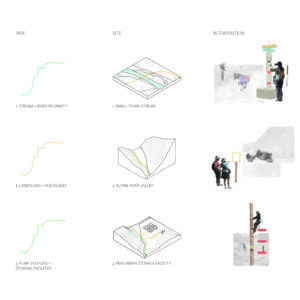
Marking Risk and Response: Design Interventions to Support Citizen Science Monitoring of the Trans Mountain Pipelines
Peter Samuels, 2020. Advisors: Catherine De Almeida and Jeff Hou
A Bouquet of Benefits: Floriculture and Ecosystem Gifts in an Urban Industrial Zone
Elizabeth Housley, 2020. Advisors: Catherine De Almeida and Ken Yocom
Navigating Extractive Entanglements through the Synthesis of Infrastructure and Ecological Function in Iquitos, Peru
Hope Freije and Rhiannon Neuville, 2020. Advisors: Julie Parrett, Leann Andrews, and Coco Alarcón